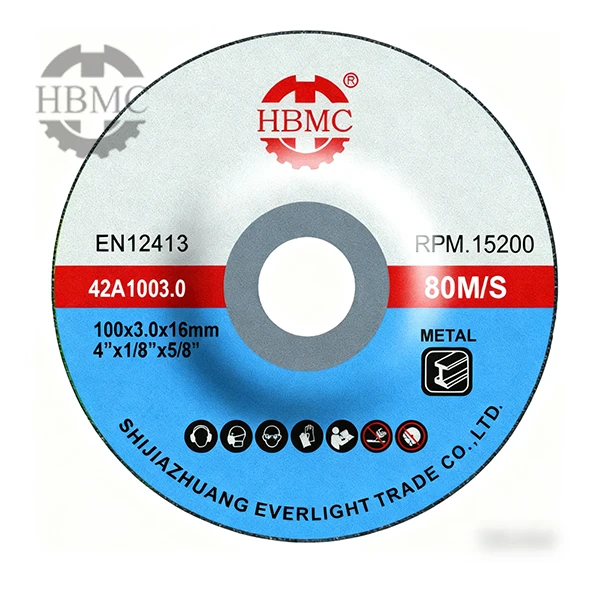
Cutting discs are widely used consumables in hardware processing, steel structure cutting, mechanical grinding, and construction operations, featuring high hardness, stable cutting performance and strong compatibility. As brittle abrasive tools, cutting discs are prone to surface cracks, internal invisible cracks and edge cracks due to impact, moisture, overload operation, aging and improper installation.
Many operators take chances and continue using, simply repairing or reluctantly grinding with cracked cutting discs, which constitutes a common high-risk safety hazard in industrial production. Cracked cutting discs operating at high speed are likely to burst and produce flying debris, causing equipment damage and personal injury. Combined with industrial safety specifications, this article elaborates on the standard handling procedures, strict prohibitions, causes and preventive measures for cracked cutting discs, helping enterprises standardize on-site operations and avoid potential safety risks.
1. Core Compliance Principle for Cracked Cutting Discs
In accordance with national safety specifications and industrial and commercial enterprise safety production standards, cracks of any form and position on cutting discs are irreparable, and damaged cutting discs are strictly prohibited from further use. All defective cutting discs with visible surface cracks, fine edge cracks, internal invisible cracks or layered cracks must be immediately shut down, discontinued from use, scrapped in compliance with regulations and centrally recycled.
Cutting discs are brittle tools operating at high rotating speeds. Once the internal structure cracks, the overall structural strength and stability will decrease significantly, failing to withstand the impact force and centrifugal force during cutting and grinding. Any repair methods including gluing, tape wrapping, resin filling and trimming cannot restore the original structural strength. These measures only cover up defects temporarily and may lead to sudden bursting during operation, which belongs to serious irregular operation.
2. Standard Disposal Procedures for Cracked Cutting Discs
Once cracks are found, operators must follow standardized procedures including shutdown, disassembly, marking, storage and replacement to avoid arbitrary disposal and defective operation, ensuring full-process construction safety.
2.1 Immediate power-off and operation termination
Once cracking, abnormal noise or excessive vibration is detected during operation, cut off the equipment power immediately and keep the equipment static until the cutting disc stops completely. Forced shutdown and emergency braking are prohibited, which may expand cracks and cause sudden bursting and splashing due to inertial rotation. Trial operation and idle running tests are also forbidden to prevent secondary risks.
2.2 Standard disassembly of damaged cutting discs
After the equipment is fully powered off and stationary, wear protective gloves, goggles and other labor protection equipment, and disassemble the cutting disc steadily with special tools. Handle the cutting disc gently during disassembly to avoid forced pulling, dropping and impact, which may cause debris scratching and further structural damage. Clean up residual debris on equipment flanges and clamping plates after disassembly to ensure a flat and clean mounting surface.
2.3 Marking and isolation to prevent misuse
Label all disassembled cracked cutting discs with marks of "Damaged & Scrapped, No Use". Place them independently in special waste recycling bins and store separately from intact new cutting discs. Do not stack defective cutting discs on workbenches, tool cabinets or consumable storage areas, so as to prevent accidental misuse by other operators and subsequent safety accidents.
2.4 Comprehensive inspection of equipment hidden dangers
Inspect potential equipment faults before installing new cutting discs. Check whether the equipment speed matches the rated speed of the cutting disc, whether flanges and clamping plates are deformed or loose, whether the spindle is eccentric, and whether the protective cover is intact. Most cutting disc cracks are not caused by quality problems of consumables, but by overspeed operation, eccentric installation and unstable fixation. Hidden dangers must be completely rectified before replacement to avoid repeated damage.
2.5 Standard replacement and test operation
Select intact cutting discs with consistent specifications and parameters, install in standard alignment and fasten the clamping plates evenly to ensure flat and offset-free mounting. After installation, conduct idle running test for more than 1 minute in an unmanned area. Confirm no abnormal noise and severe vibration before putting the equipment into formal cutting and grinding operation.
3. Strict Prohibitions for Cracked Cutting Disc Disposal (Common Irregular Practices)
Most on-site safety accidents result from improper disposal behaviors. The following wrong operations must be strictly eliminated to fully comply with safety production specifications.
1. No repair and reuse: It is forbidden to repair cracked cutting discs by gluing, tape winding, resin filling or trimming. Repaired cutting discs have unbalanced structural strength and may burst at high speed.
2. No cutting and reconstruction for reuse: Do not cut down cracked cutting discs or polish off cracked areas for continued use. The overall stress structure of damaged cutting discs has been destroyed, and bursting risks still exist after reconstruction.
3. No reduced-load operation: Cracked cutting discs are not allowed for low-speed grinding, light-duty operation or auxiliary processing. Structural damage cannot be eliminated by reducing operation intensity, and potential risks persist.
4. No mixed storage and random disposal: Damaged cutting discs shall not be mixed with intact consumables or discarded randomly. Sharp debris may cause scratches and accidental misuse, requiring centralized and standardized recycling.
4. Common Causes of Cutting Disc Cracks
Targeted daily management can reduce crack risks and lower consumable loss and safety hidden dangers by clarifying damage causes.
1. External force damage: Caused by impact, dropping and extrusion during handling, stacking and use. Tiny invisible internal cracks may form under slight collision and expand rapidly under operating force. Cutting discs are brittle and vulnerable to internal structural damage.
2. Overspeed operation: When the no-load speed exceeds the rated maximum speed of the cutting disc, the centrifugal force beyond the bearing limit will easily cause cracking and chipping, which is a major cause of severe safety accidents.
3. Non-standard installation: Skewed flanges, uneven tightness, spindle eccentricity and missing gaskets lead to unbalanced stress, equipment jitter and eccentric grinding during operation, eventually causing fatigue cracking and damage.
4. Aging and moisture deterioration during storage: Long-term open storage, moisture exposure, sunlight exposure and excessive stacking will degrade binder performance and cause delamination and embrittlement. Resin and rubber bonded cutting discs that have been stored for more than one year without safety rotation test are prone to cracking during use.
5. Improper operation methods: Excessive force, forced pressing, oblique grinding and instantaneous impact on workpieces exceed the cutting disc’s load limit, resulting in local cracking and edge chipping.
5. Precautionary Measures to Reduce Cutting Disc Cracks
Standard daily management can effectively reduce crack damage, improving operation safety and consumable utilization rate.
1. Mandatory visual inspection before operation: Check the surface and edges for cracks, chipping, delamination and moisture softening before each use. Tap the cutting disc gently to judge internal conditions by sound: a clear sound indicates normal state, while a dull sound means internal damage and immediate scrapping is required.
2. Strict speed parameter matching: Verify the consistency between equipment operating speed and cutting disc rated speed. Equipment speed shall never exceed the maximum allowable speed of the cutting disc to avoid overspeed operation.
3. Standard storage and handling: Store cutting discs in classified flat or vertical arrangement with reasonable stacking height to avoid compression deformation. Handle gently without throwing and impacting. Keep the storage environment dry and ventilated to prevent moisture aging.
4. Standard installation specifications: Keep flanges and gaskets clean and flat to ensure uniform mounting stress, avoiding eccentric installation and forced assembly. Calibrate spindle accuracy regularly to prevent cutting disc damage caused by equipment failure.
5. Standard operation techniques: Operate with uniform and gentle pressure to avoid violent impact, oblique grinding and overload operation, reducing instantaneous stress and extending cutting disc service life.
6. Conclusion
The only correct disposal method for cracked cutting discs is shutdown disassembly, marked scrapping and prohibition of reuse. There is no feasible solution for repair, reconstruction or reduced-load use. The core risk of cracked cutting discs lies in failed structural strength, which easily causes bursting and flying debris at high speed and belongs to key safety hazards in industrial sites.
Enterprises and operators must strictly abide by safety operation specifications and abandon fluke mindsets. Full-process management including pre-operation inspection, standardized storage, standard installation and compliant operation can fundamentally reduce cutting disc crack damage, ensure on-site construction safety, reasonably control consumable loss, and achieve the goals of safe and standardized production.