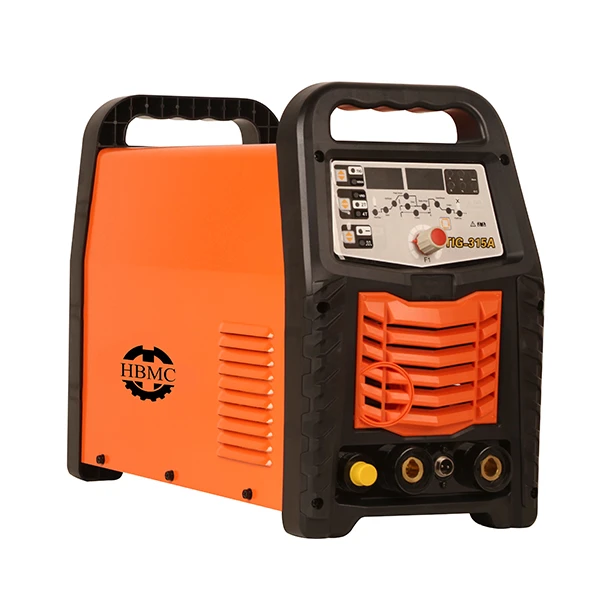
Unstable arcing during welding manifests as difficult arc ignition, intermittent arc flickering and fluctuating spark intensity. It may lead to poor weld formation and increased welding spatter, hindering construction progress. Fault triggers involve power supply circuits, equipment accessories, base material conditions, operating methods and other aspects. The common causes of unstable arcing in welding machines are sorted by category below for on-site step-by-step troubleshooting.
1. Issues with Power Supply and Circuits
Power supply voltage fluctuation is a frequent factor behind unstable arcing. Changes in grid load and excessive line voltage drop may pull the input voltage of the welding machine out of the normal operating range, resulting in fluctuating output current and difficulty maintaining a stable arc.
Undersized power cables, excessively long wires, loose terminals or oxidized corrosion can increase contact resistance. Large-current welding creates voltage drop, causing arc breakage and intermittent arcing. Insufficient capacity of power sockets and circuit breakers may also lead to inadequate power supply the moment the arc strikes.
Poor ground connection also affects arc performance. Damaged ground cables, rust or oil contamination on the contact surface between the ground clamp and workpiece block the current loop, leading to intermittent current flow and unstable arcing directly.
2. Faults in Internal Welding Machine Components
Aging internal components can undermine output stability. Degraded or faulty rectifier modules, main control boards and capacitors cause fluctuations in output current and voltage, and the arc tends to cut out after ignition.
Excessive dust accumulation inside the machine on circuit boards and terminals may cause electric leakage and poor virtual connection in humid environments and disturb current output. Malfunction of cooling fans leads to poor heat dissipation. When the welding machine temperature rises, overheating protection will trigger and result in intermittent arc interruption.
Worn aging current and voltage adjustment knobs or potentiometers feature poor internal contact. The output value keeps jumping during parameter adjustment, making the welding arc fluctuate in intensity.
3. Problems with Welding Torch and Wire Feeding Components
Welding torch accessories are high-incidence fault parts. Broken internal torch cables or loose connectors, worn or deformed contact tips disrupt stable current conduction and trigger arc breakage and fluctuating spark strength. Blocked contact tips hinder wire feeding and also affect continuous arc combustion.
Wire feeder faults are commonly seen in gas shielded welding. Improper wire feeder roller pressure, worn feed rollers or excessive resistance on the wire spool lead to inconsistent wire feeding speed. Irregular wire delivery changes the arc length continuously, which appears visually as unstable arcing.
Built-up spatter on the nozzle shield disrupts gas delivery. Bent or leaking air hoses and unstable shielding gas pressure also interfere with arc combustion and cause arc drift and arc breakage.
4. Base Material Surface Conditions
Workpiece surface conditions influence arc striking and stability. Rust, oxide scale, oil, paint or plating on the base material reduce electrical conductivity, making arc ignition harder and causing frequent arc interruption.
Uneven workpiece thickness or excessive gaps and misalignment between workpieces alter current conduction conditions during welding and trigger arcing fluctuations. High-alloy materials conduct heat rapidly. Without corresponding parameter adjustment, heat dissipates quickly and the arc cannot be maintained steadily.
5. Welding Parameters and Operation-Related Factors
Mismatched welding parameters cause abnormal arcing. Improper matching of current and voltage: low current easily breaks the arc, while excessively high voltage creates an overly long flickering arc. Mismatch between wire diameter and set parameters also prevents stable arc maintenance.
Operating techniques affect arc stability. If the distance between the torch and workpiece varies constantly during welding, the arc length changes continuously and sparks become unstable. Excessively fast travel speed or shaky torch manipulation also leads to intermittent arcing.
Environmental factors should not be overlooked. Strong winds disperse shielding gas and destabilize the arc. In low-temperature environments, welding wire hardens and hinders arc ignition.
Summary
Unstable arcing of welding machines mainly stems from power supply circuits, internal machine components, welding torches and wire feeding accessories, base material conditions, welding parameters and on-site operations. It is recommended to start troubleshooting from simple external items: inspect power wiring, grounding, torch accessories and workpiece surfaces, verify welding parameters, and then test internal machine components. Targeted handling after identifying the cause can restore arc stability and reduce welding defects. If internal components are damaged, maintenance should be completed by professional personnel.