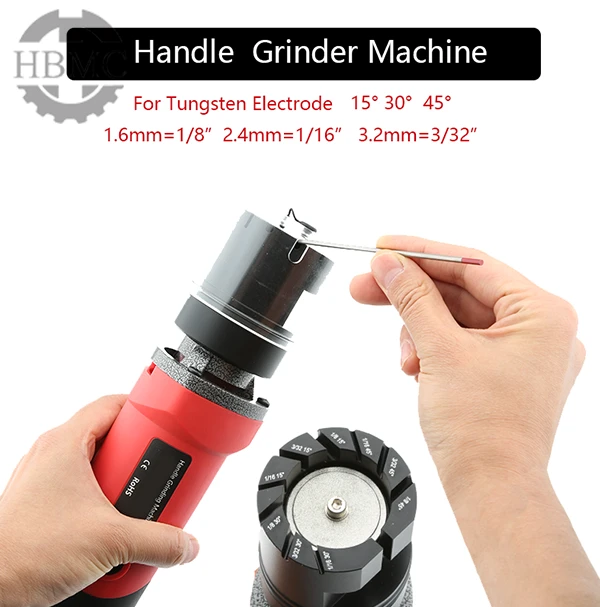
In TIG welding operations, the polishing accuracy, surface smoothness and taper uniformity of tungsten electrodes directly determine arc stability, weld formation quality and welding yield rate. As standardized polishing equipment, tungsten grinders can replace manual grinding to achieve unified angles, smooth surfaces and consistent specifications of tungsten electrodes, which serves as essential auxiliary equipment for stable welding processes.
In actual operation, welders often encounter unsatisfactory polishing results, including rough surfaces, scratches, tapered deviation, tip eccentricity, overheating discoloration and unstable arcs, which fail to meet the requirements of precision welding. Poor polishing performance is rarely caused by a single equipment fault, but results from multiple overlapping factors including abrasive matching, equipment condition, operating methods, daily maintenance and working environment. This article comprehensively analyzes the core causes of poor tungsten grinder polishing effects, providing references for on-site equipment debugging, fault troubleshooting and standardized operation.
1. Improper Matching and Aging of Polishing Abrasives (Most Common Cause)
Tungsten grinder abrasives mainly include diamond grinding discs and abrasive wheels. The matching degree and working condition of consumables are the basic factors determining polishing quality, and most polishing defects stem from abrasive problems.
First, mismatched abrasive selection. Tungsten electrodes of different diameters and materials require grinding discs with corresponding mesh sizes and textures. Coarse-mesh discs deliver fast grinding speed but tend to leave obvious scratches and pits, resulting in rough tungsten surfaces. Excessively fine-mesh discs feature insufficient grinding force, low working efficiency and incomplete polishing at the electrode tip. In addition, general abrasive wheels have limited adaptability; long-term grinding on hard tungsten materials easily causes abrasive particle shedding and uneven working surfaces, failing to support high-precision polishing.
Second, abrasive wear and clogging. After long-term use, the surface abrasive particles become worn and passivated with reduced grinding capacity. The discs can only lightly rub the tungsten surface without complete shaping, leading to irregular tapers and fuzzy surfaces. Meanwhile, tungsten powder and metal debris generated during polishing will block the disc pores, causing uneven stress on the working surface, partial over-grinding or under-grinding, and eventually resulting in electrode eccentricity and disordered surface textures.
Third, incorrect disc installation. Loose installation, unlocked fixing nuts and tilted grinding discs cause swinging and jumping during high-speed operation, directly leading to tungsten eccentricity, tapered distortion and wavy surface textures, which seriously undermine polishing accuracy.
2. Equipment Failure and Precision Degradation
Tungsten grinders are precision miniature devices. Minor faults in the core transmission and positioning structures will reduce polishing accuracy, serving as major hardware causes for substandard polishing results.
Spindle shaking and bearing wear are frequent faults. Long-term frequent start-stop and continuous load operation increase bearing clearance and reduce spindle concentricity. The grinding disc runs unstably with radial runout during polishing, causing eccentric tips and asymmetric tapers on tungsten electrodes, further leading to arc drift and instability in welding.
Failure of positioning clamps also affects polishing performance. Long-term use causes clamp mouth wear, loose clamping and positioning deviation. The tungsten electrode cannot be fixed centrally and shakes during polishing, resulting in angular deviation, uneven thickness and irregular tips. Accumulated dust and debris on the clamp will cause poor fitting and further increase polishing errors.
In addition, abnormal rotating speed and insufficient motor power lead to polishing defects. Voltage fluctuation and motor aging cause low speed and stalling. The tungsten electrode bears uneven force during grinding, resulting in rough textures, incomplete shaping and passivated tips.
3. Non-standard Operating Methods
Most poor polishing results are attributed to non-standard operation. Even with qualified equipment and abrasives, incorrect operating habits will cause various polishing defects.
Unreasonable polishing angle setting is a primary problem. Failure to adjust the angle gear according to welding process requirements leads to inappropriate tapers, such as blunt tips, overly short tapered surfaces and asymmetric angles, which cannot support stable arc output. Some operators adjust angles empirically without referring to scale calibration, resulting in angular errors.
Improper grinding pressure and duration exert significant impacts. Excessive pressure causes local overheating, oxidation discoloration and micro-cracks on tungsten electrodes, and deforms the grinding disc to produce wavy textures. Insufficient pressure cannot remove burrs and original surface defects thoroughly. Excessively long single grinding time causes continuous friction overheating, surface ablation and rough textures; insufficient grinding time leads to incomplete shaping.
Irregular tungsten rotation also triggers defects. Uneven rotation and intermittent offset during polishing cause inconsistent tapered surface grinding, partial over-grinding and residual original textures, reducing surface flatness and finish.
4. Defects of Tungsten Electrode Base Material
The base material condition and early wear state of tungsten electrodes directly affect the final polishing effect, which is easily overlooked by operators.
Worn and aged tungsten electrodes are difficult to repair. Electrodes used for long-term welding suffer from tip melting, ablation, cracking and deformation. The original base material has large deviations, making it hard to achieve regular shaping through conventional grinding, and residual defects such as irregular tapers and surface flaws remain.
Inconsistent tungsten materials and specifications cause adaptation problems. Tungsten electrodes with different hardness have different grinding characteristics. Adopting unified parameters and abrasives for all types leads to incomplete grinding for high-hardness electrodes and excessive grinding or surface scratching for low-hardness electrodes. In addition, bending deformation without correction before polishing will continuously cause eccentricity and tapered distortion.
5. Inadequate Maintenance and Harsh Working Conditions
Insufficient daily maintenance and harsh operating environments accumulate potential equipment risks and gradually reduce polishing accuracy and stability.
Incomplete equipment cleaning is a common issue. Long-term accumulation of metal dust and debris on clamps, grinding discs, spindles and adjusting scales causes positioning jamming, loose clamping and disc clogging, resulting in inconsistent polishing quality in batch operation.
Lack of regular calibration and maintenance. Long-term running equipment without regular calibration of angle scales, spindle concentricity and clamp positioning accuracy accumulates minor errors, leading to batch angular deviation and poor uniformity. Insufficient lubrication and delayed replacement of aging accessories further accelerate precision degradation.
Harsh workshop environments produce indirect impacts. Welding workshops are usually dusty, vibrating and unstable in temperature and humidity. Long-term operation under such conditions accelerates accessory wear and structural offset, reducing polishing stability and causing various surface defects.
6. Negative Impacts of Poor Tungsten Polishing on Welding Quality
Rough surfaces, uneven tapers and eccentric tips cause unstable arc burning and wandering arcs during TIG welding, easily resulting in welding pores, slag inclusions, uneven weld width and poor molding, which reduces the welding yield rate. In addition, overheated and micro-cracked tungsten electrodes have shorter service life, prone to tip falling off and ablation, increasing consumable replacement costs and affecting the continuity of welding operations.
Conclusion
In summary, poor polishing results of tungsten grinders are mainly caused by five major factors: abrasive mismatching and aging, equipment precision attenuation, non-standard operation, defective tungsten base materials and insufficient daily maintenance. To ensure high polishing accuracy, it is necessary to standardize abrasive selection and replacement, conduct regular equipment calibration and maintenance, implement standardized operation procedures, and screen and correct tungsten electrodes in advance. These measures effectively avoid polishing defects, ensure regular tapers and smooth surfaces of tungsten electrodes, and provide reliable support for stable TIG welding and high-quality weld formation.